Businesses looking to grow your business by organic marketing in 2026 must focus on sustainable strategies that build long-term authority instead of relying only on paid advertising.
In today’s hyper-competitive digital landscape, businesses are constantly searching for sustainable, cost-effective ways to grow. While paid advertising delivers quick wins, it is organic marketing that builds lasting brand authority, trust, and compounding returns over time. At Angelspire, we have spent years helping businesses across industries unlock the true power of organic growth — and the results speak for themselves.
Organic marketing refers to sustainable and cost-effective methods businesses use to attract customers naturally without paying for advertisements. If you want to grow your business by organic marketing, strategies like SEO for organic business growth, content marketing strategies 2026, social media organic growth, and organic lead generation strategies play a major role in building long-term visibility and trust. This includes search engine optimization (SEO), content marketing, social media engagement, email marketing, and more. When executed correctly, these strategies help your business rank higher in search engine results, establish credibility, and foster a loyal community around your brand.
This blog post walks you through 7 proven, actionable ways to grow your business by organic marketing in 2026 — incorporating the latest insights around AI tools, Answer Engine Optimization (AEO), Generative Engine Optimization (GEO), and evolving SERP dynamics that every growth-focused business must understand.
Table of Contents
ToggleIntroduction to the 7 Ways to Grow Your Business by Organic Marketing
Organic marketing is far more than a standalone strategy — it is a refined ecosystem of interconnected digital growth frameworks designed to build sustainable visibility, authority, and trust without dependence on paid advertising. At Angelspire, we combine advanced SEO, premium content marketing, community-driven engagement, AI-assisted optimization, and modern search intelligence to create powerful organic growth systems that deliver long-term business impact.
The seven strategies explored in this guide represent a complete blueprint for modern digital growth — blending technical excellence with authentic storytelling and data-driven optimization. From strengthening search engine discoverability to building loyal online communities and optimizing for AI-powered search experiences, Angelspire helps brands create a digital presence that compounds in value over time and positions them as leaders within their industry.
Each of these strategies has been field-tested by the Angelspire team across diverse industries. Whether you are a startup trying to establish your first digital footprint or an established enterprise looking to reduce customer acquisition costs, these organic marketing pillars form the foundation of sustainable business growth.
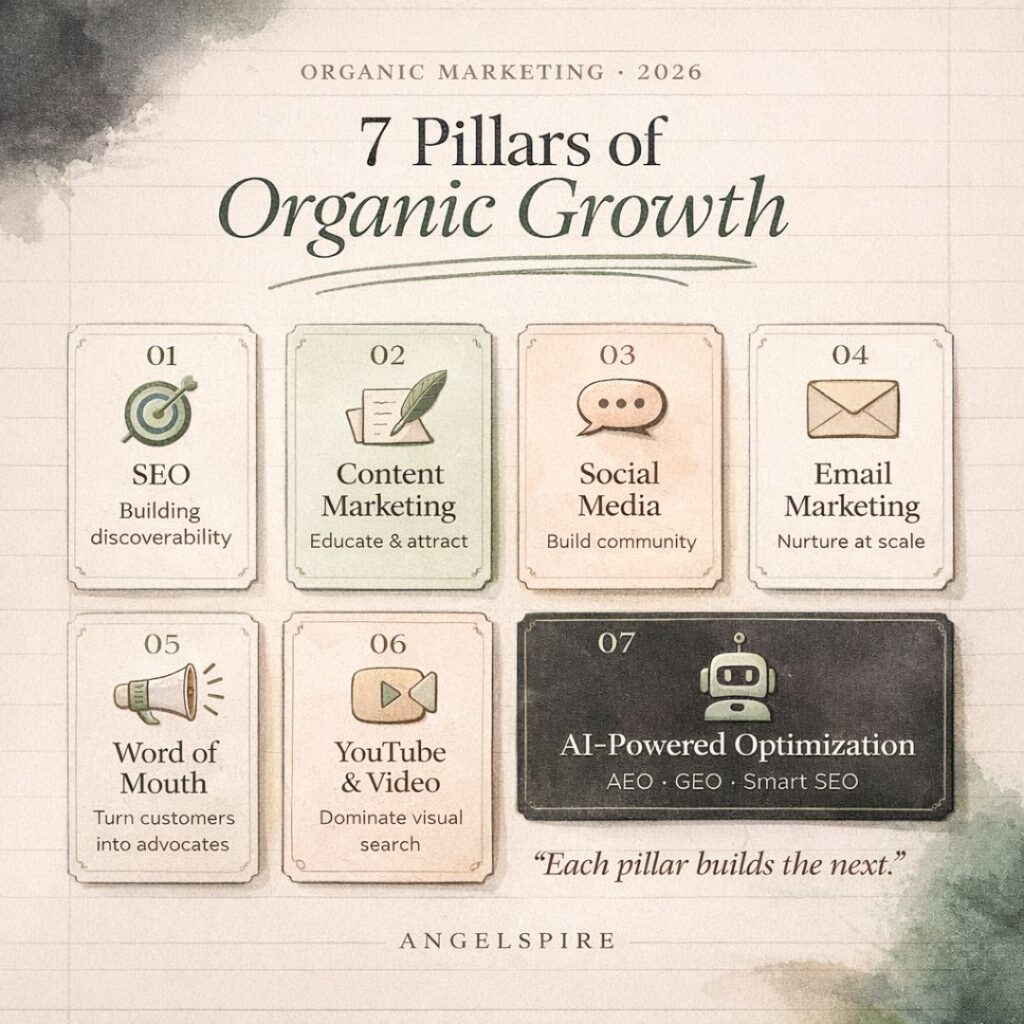
The 7 core strategies are:
- Search Engine Optimization (SEO) — Building Discoverability
- Content Marketing — Educating and Attracting Your Audience
- Social Media Organic Growth — Building Community
- Email Marketing — Nurturing Relationships at Scale
- .Referral and Word-of-Mouth Marketing — Turning Customers into Advocates
- YouTube and Video SEO — Dominating Visual Search
- AI-Powered Content Optimization — Embracing AEO, GEO, and Smart SEO
Why Organic Marketing Matters More Than Ever in 2026
The digital marketing landscape in 2026 has undergone seismic shifts. With the proliferation of AI-generated content, rising ad costs, and increasingly sophisticated consumers, businesses that rely solely on paid traffic are finding diminishing returns. Meanwhile, brands that invested in organic marketing consistently over the past several years are reaping compounding rewards.
Google’s algorithm updates have doubled down on E-E-A-T (Experience, Expertise, Authoritativeness, and Trustworthiness) as a ranking signal. This means authentic, experience-backed content produced by real experts — exactly the kind Angelspire specializes in creating — performs significantly better than generic, templated content. Businesses that demonstrate genuine expertise and build trust signals through consistent organic marketing are the ones climbing the SERPs.
Furthermore, the rise of AI-powered search through tools like Google’s Search Generative Experience (SGE) and Bing’s Copilot integration has introduced entirely new ranking categories. Today, appearing in AI-generated answer boxes, featured snippets, and generative search results requires a nuanced understanding of Answer Engine Optimization (AEO) and Generative Engine Optimization (GEO) — areas where Angelspire stays on the cutting edge.
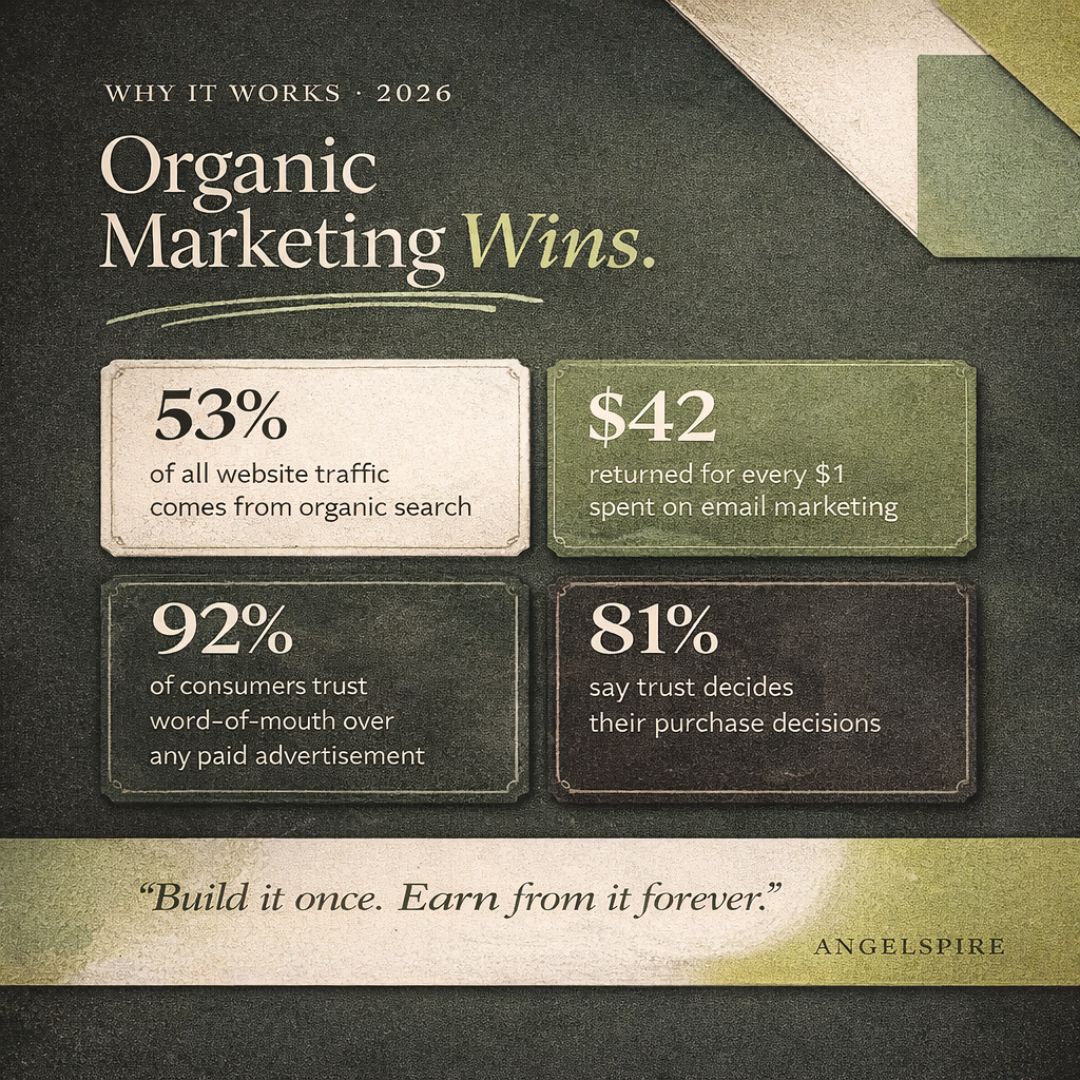
According to a 2025 study by HubSpot, organic search still drives over 53% of all website traffic across industries — more than any other channel combined. For businesses looking to build a moat against competition, investing in organic marketing is not optional — it is essential.
Key Benefits of Growing Your Business by Organic Marketing
Understanding why to invest in organic marketing is just as important as knowing how. The benefits go far beyond just saving money on ads — they touch every part of your business from brand reputation to long-term revenue stability.
1. Cost Efficiency and Higher ROI
Organic marketing does not require a continuous media budget to sustain results. A well-optimized blog post or video can generate traffic, leads, and conversions for years without additional investment. At Angelspire, we have seen clients achieve 5x to 10x return on investment from organic content created two or three years prior. While the initial effort is real, the ongoing cost per acquisition drops dramatically over time — making organic marketing one of the highest-ROI channels available.
2. Builds Trust and Brand Authority
Consumers are more discerning than ever. They research brands extensively before purchasing, and organic marketing — through authentic content, genuine reviews, and consistent social engagement — helps you earn trust rather than rent it. According to Edelman’s Trust Barometer, 81% of consumers say trust is a deciding factor in purchasing decisions. Organic marketing is fundamentally the practice of building that trust at scale.
3. Sustainable, Compounding Growth
Unlike paid advertising, which stops the moment you stop paying, organic marketing compounds over time. Each piece of optimized content, each backlink earned, and each satisfied customer who shares your brand contributes to a growing momentum. Angelspire’s organic marketing frameworks are designed specifically to create this compounding effect — turning early effort into long-term business assets.
4. Better Qualified Traffic and Leads
Organic marketing attracts people who are actively searching for solutions you provide. This intent-driven traffic converts at substantially higher rates than broadly targeted paid ads. When someone lands on your site from a well-ranked blog post or YouTube video, they are already in problem-solving mode — making them far more receptive to your offer.
The 7 Ways to Grow Your Business by Organic Marketing
Way 1: Search Engine Optimization (SEO) — Building Discoverability
SEO remains the backbone of organic marketing and is one of the most powerful ways to grow your business by organic marketing in 2026. Businesses looking for organic business growth strategies should focus on creating high-quality content, improving technical SEO, and understanding how to grow business organically without depending entirely on paid advertising campaigns. When someone searches for a product or service you offer, appearing on the first page of Google is worth more than any billboard or TV ad. Effective SEO in 2026 encompasses technical optimization (site speed, Core Web Vitals, mobile responsiveness), on-page optimization (keyword strategy, semantic content, internal linking), and off-page signals (backlinks, brand mentions, social signals).
Angelspire’s SEO methodology is built around Google’s E-E-A-T framework. We help clients create content that demonstrates real-world experience and domain expertise, which is exactly what Google’s quality raters are evaluating. A practical starting point is to conduct a comprehensive keyword gap analysis, identify high-intent long-tail keywords your competitors are missing, and systematically create content that fills those gaps.
Way 2: Content Marketing — Educating and Attracting Your Audience
Content marketing is the fuel that powers organic marketing. Every blog post, case study, whitepaper, infographic, and podcast episode is a long-term asset that works around the clock to attract, educate, and convert your target audience. The key in 2026 is moving beyond generic ‘top 10 lists’ and creating pillar content that provides genuine depth, unique insights, and practical value.
A real-world example: One of Angelspire’s B2B SaaS Marketing clients built out a comprehensive content hub around their core topic cluster. Within 18 months, their organic traffic grew by 340%, and inbound leads increased by 215%. The key was consistency, topic authority, and aligning every piece of content with genuine user intent — not just keyword stuffing.
Way 3: Social Media Organic Growth — Building Community
Social media organic growth continues to be one of the best free marketing strategies for business owners who want brand growth without paid ads. Platforms like LinkedIn, Instagram, and YouTube allow businesses to connect authentically with audiences, making them highly effective for organic marketing for small business and businesses learning how to grow business without paid ads. Platforms like LinkedIn, Instagram, TikTok, and X (formerly Twitter) still reward creators who produce genuinely engaging, platform-native content. The shift in 2026 is from broadcasting to community-building. Businesses that focus on sparking conversations, responding authentically, and creating content that their audience actually wants to share — not just content that promotes the brand — are winning organically.
Angelspire recommends focusing on two to three platforms where your target audience is most active, rather than spreading thin across every network. Depth of engagement on fewer platforms consistently outperforms surface-level presence everywhere. LinkedIn, in particular, remains a goldmine for B2B organic marketing, with personal brand content from founders and team members often outperforming company page posts by a factor of five or more.
Way 4: Email Marketing — Nurturing Relationships at Scale
Email marketing might be the oldest digital channel, but it delivers the highest average ROI of any organic marketing tactic — consistently cited at $36-$42 for every $1 spent according to Litmus’s State of Email report. The reason is simple: your email list is an owned asset. Unlike social media followers or search rankings, which can disappear overnight due to algorithm changes, your subscriber list belongs to you.
Building a quality email list through valuable lead magnets, consistent newsletters, and automated nurture sequences is a foundational organic marketing strategy that Angelspire helps clients implement from day one. The key in 2026 is personalization and segmentation — sending the right content to the right subscriber at the right time, powered by behavioral triggers and AI-assisted sequencing.
Way 5: Referral and Word-of-Mouth Marketing — Turning Customers into Advocates
Word-of-mouth remains the most trusted and most powerful form of marketing. Nielsen data consistently shows that 92% of consumers trust recommendations from people they know over any form of advertising. Structured referral programs, customer success stories, and review generation strategies are all mechanisms through which organic marketing leverages your existing customer base to drive new growth.
Angelspire helps businesses build systematic referral engines — identifying brand advocates, creating shareable experiences, and incentivizing word-of-mouth without making it feel transactional. Authentic testimonials and case studies are particularly powerful in 2026’s trust-economy, where consumers are skeptical of brand-generated content but highly receptive to peer validation.
Way 6: YouTube and Video SEO — Dominating Visual Search
YouTube is the world’s second-largest search engine, and video content is increasingly surfaced in Google’s main SERPs. Video SEO — optimizing titles, descriptions, tags, chapters, and transcripts — is a critical organic marketing lever that most businesses still underutilize. Educational how-to videos, product demonstrations, and thought leadership content on YouTube build authority, drive organic traffic, and significantly boost conversion rates.
A practical example from Angelspire’s portfolio: An e-commerce client in the home improvement niche created a series of 15 instructional YouTube videos. Within six months, those videos were ranking on page one of Google for competitive informational queries, driving over 12,000 organic visitors per month to their website — entirely without paid promotion.
Way 7: AI-Powered Content Optimization — Embracing AEO, GEO, and Smart SEO
Perhaps the most transformative shift in organic marketing in recent years is the emergence of AI as both a content creation assistant and a new search paradigm. Tools like ChatGPT and Google Gemini are now being used extensively by marketers to accelerate content production, conduct keyword research, analyze competitors, and generate content briefs. Angelspire’s team integrates these AI tools strategically — using them to enhance human expertise rather than replace it.
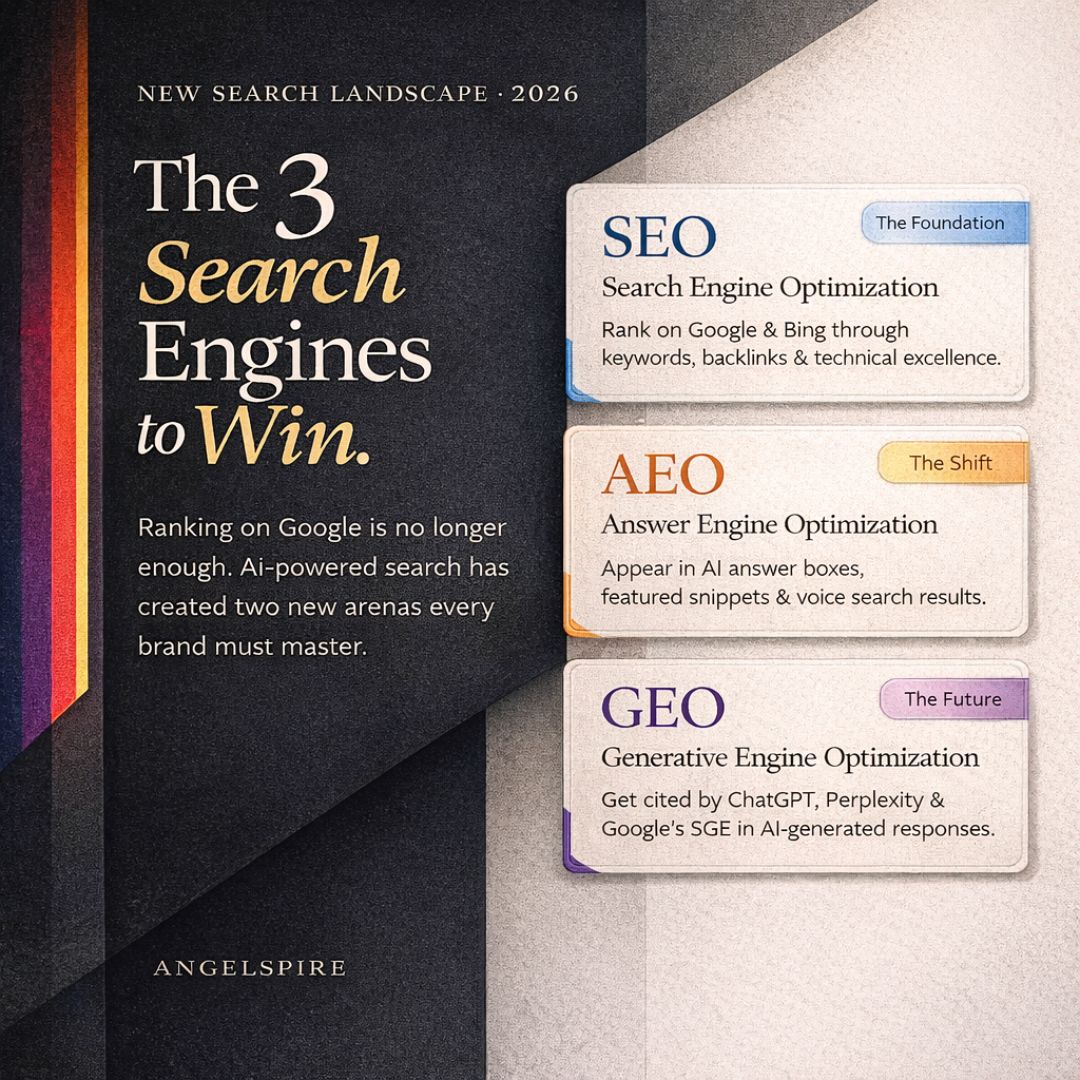
More critically, the very nature of search is evolving. Answer Engine Optimization (AEO) focuses on structuring content to appear in AI-generated answer boxes and voice search results. Generative Engine Optimization (GEO) goes further, optimizing content to be cited and surfaced by large language models in tools like ChatGPT, Perplexity, and Google’s SGE. These are not future trends — they are present realities that businesses must adapt to immediately.
To optimize for AEO and GEO, Angelspire recommends structuring content with clear, direct answers to specific questions, using structured data markup (schema.org), and building topical authority through comprehensive content clusters. This approach not only improves traditional SERP rankings but also positions your content to be cited by AI engines — a new frontier of organic visibility that most competitors have not yet fully explored.
Latest Trends and Insights in Organic Marketing for 2026
Staying ahead in organic marketing requires constant adaptation. In 2026, several major trends are reshaping how businesses grow organically, and Angelspire is at the forefront of each of them.
The most significant trend is the mainstreaming of AI in search. Google’s Search Generative Experience has fundamentally changed how search results pages (SERPs) look, with AI-generated overviews now appearing above traditional organic results for millions of queries. This has made featured snippet optimization, FAQ schema, and structured content architecture more important than ever. Businesses working with Angelspire are adapting their content strategies to win in this new zero-click search landscape.
Another major trend is the rise of community-led organic growth. Forums like Reddit, Quora, and niche-specific online communities are now heavily featured in Google SERPs. Building genuine presence in these communities — by contributing expert answers and participating authentically rather than spamming links — has become a legitimate organic marketing channel with measurable impact on both traffic and brand perception.
Short-form video continues to dominate across platforms. TikTok, Instagram Reels, and YouTube Shorts are all algorithmic channels that can deliver explosive organic reach when brands create genuinely valuable, entertaining, or educational content. Angelspire’s social content team helps brands develop platform-specific video strategies that are consistent, on-brand, and optimized for each platform’s unique discovery mechanics.
Finally, the importance of first-party data is accelerating the integration between email marketing and content marketing. With third-party cookies largely phased out and privacy regulations tightening globally, organic marketing strategies that build owned audiences — through email lists, membership communities, and loyalty programs — are becoming the most valuable long-term assets a business can develop.
Challenges in Organic Marketing and How to Overcome Them
Organic marketing is undeniably powerful, but it is not without its challenges. Understanding these obstacles upfront — and having strategies to overcome them — is what separates businesses that succeed organically from those that give up prematurely.
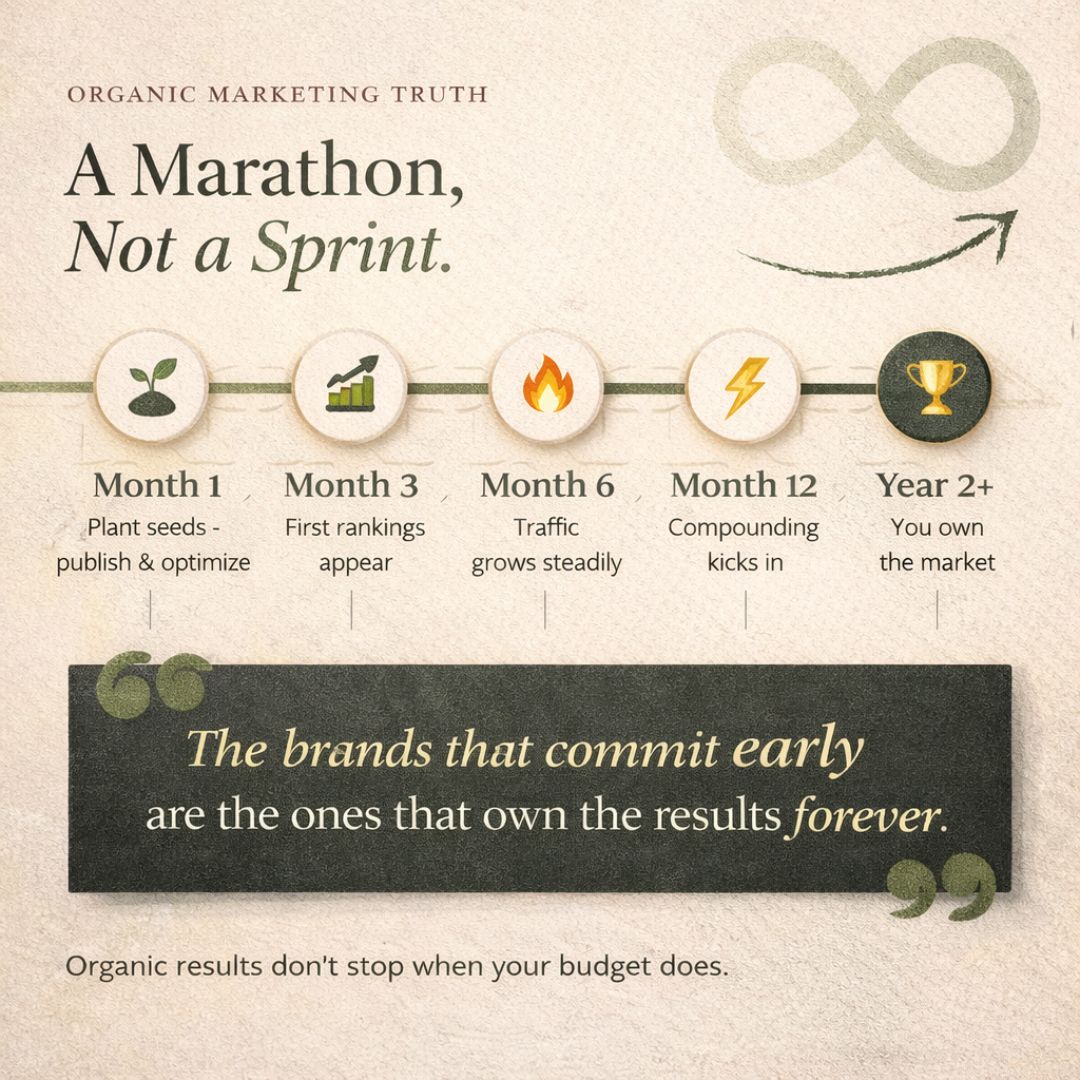
The most commonly cited challenge is time. Organic marketing does not produce overnight results. SEO typically takes three to six months before meaningful ranking improvements are visible, and content marketing requires consistent effort over an extended period before the compounding effect kicks in. This is why Angelspire emphasizes building realistic expectation frameworks with clients from the very beginning — organic marketing is a marathon, not a sprint, and businesses that understand this are the ones that commit long enough to see transformational results.
Content saturation is another real challenge. In many industries, hundreds of blog posts exist on every conceivable topic. Breaking through requires either finding underserved content niches, producing demonstrably higher-quality content than what currently ranks, or leveraging unique proprietary data and firsthand experience that AI-generated content cannot replicate. This is precisely where E-E-A-T compliance becomes a competitive advantage — and where Angelspire’s approach of integrating subject matter experts into content creation pays dividends.
Algorithm volatility is an ever-present concern. Google’s core updates can cause significant ranking fluctuations for any site. However, businesses that have built their organic marketing on genuine expertise, technical excellence, and authentic audience engagement consistently recover faster from updates — and often emerge stronger. The sites most damaged by algorithm updates are typically those that relied on thin content, manipulative link building, or keyword stuffing rather than genuine value creation.
Finally, measurement and attribution remain challenging in organic marketing. Unlike paid advertising where every click is tracked and attributed, organic marketing’s impact is often distributed across multiple touchpoints. Angelspire helps clients implement robust analytics frameworks — combining Google Analytics 4, Google Search Console, and advanced attribution modeling — to accurately measure the full value of their organic marketing investments.
Conclusion: Your Organic Marketing Growth Starts Today
Growing your business by organic marketing is one of the most impactful decisions you can make in 2026. The seven strategies covered in this guide — SEO, content marketing, social media organic growth, email marketing, referral marketing, video SEO, and AI-powered optimization — are not isolated tactics but interconnected pillars of a holistic organic growth engine.
When implemented together with consistency and strategic intent, these organic marketing channels build an ever-growing competitive moat around your business. They generate qualified traffic that converts, build brand authority that endures, and create audience relationships that compound in value over time. The businesses winning in organic search, social, and AI-powered discovery in 2026 are not necessarily those with the biggest budgets — they are the ones that committed to organic marketing excellence early and executed with discipline.
The challenges are real — it takes time, expertise, and consistent effort. But the returns are exceptional, and the brands that master organic marketing own their growth in a way that paid-only strategies can never achieve.
The most commonly cited challenge is time. Organic marketing does not produce overnight results. SEO typically takes three to six months before meaningful ranking improvements are visible, and content marketing requires consistent effort over an extended period before the compounding effect kicks in. This is why Angelspire emphasizes building realistic expectation frameworks with clients from the very beginning — organic marketing is a marathon, not a sprint, and businesses that understand this are the ones that commit long enough to see transformational results.
Content saturation is another real challenge. In many industries, hundreds of blog posts exist on every conceivable topic. Breaking through requires either finding underserved content niches, producing demonstrably higher-quality content than what currently ranks, or leveraging unique proprietary data and firsthand experience that AI-generated content cannot replicate. This is precisely where E-E-A-T compliance becomes a competitive advantage — and where Angelspire’s approach of integrating subject matter experts into content creation pays dividends.
Algorithm volatility is an ever-present concern. Google’s core updates can cause significant ranking fluctuations for any site. However, businesses that have built their organic marketing on genuine expertise, technical excellence, and authentic audience engagement consistently recover faster from updates — and often emerge stronger. The sites most damaged by algorithm updates are typically those that relied on thin content, manipulative link building, or keyword stuffing rather than genuine value creation.
Finally, measurement and attribution remain challenging in organic marketing. Unlike paid advertising where every click is tracked and attributed, organic marketing’s impact is often distributed across multiple touchpoints. Angelspire helps clients implement robust analytics frameworks — combining Google Analytics 4, Google Search Console, and advanced attribution modeling — to accurately measure the full value of their organic marketing investments.
How to Grow Business Organically Without Depending on Ads
Businesses today are increasingly searching for ways to grow your business by organic marketing because paid advertising costs continue to rise every year. One of the best organic business growth strategies is creating evergreen content that continues attracting visitors for months or even years. Brands that focus on SEO for organic business growth, educational blogs, and audience engagement build stronger authority over time. Businesses learning how to grow business organically should prioritize consistency, user experience, and trust-building instead of short-term promotional tactics. Organic marketing for small business owners works especially well because it allows brands to compete with larger companies without massive ad budgets. By combining search optimization, social media organic growth, and customer-focused content, businesses can achieve long-term visibility and sustainable lead generation.
Best Free Marketing Strategies for Business Growth in 2026
Businesses aiming for brand growth without paid ads should focus on high-impact free marketing strategies for business expansion. Some of the most effective methods include content marketing strategies 2026, email newsletters, YouTube SEO, community engagement, and organic lead generation strategies. These techniques help businesses attract high-intent audiences naturally instead of interrupting users with advertisements. Companies that grow your business by organic marketing usually invest heavily in educational content and long-term relationship building. Social media organic growth also plays a critical role because engaging and valuable content increases reach without requiring advertising spend. In 2026, businesses that consistently provide value across multiple channels will dominate organic visibility and customer trust.
Why Organic Lead Generation Strategies Matter for Long-Term Success
Organic lead generation strategies are essential for businesses that want predictable and sustainable growth. Unlike paid campaigns that stop producing results once budgets end, organic marketing continuously builds visibility and authority over time. Businesses using SEO for organic business growth, social media organic growth, and content marketing strategies 2026 generate leads from users already searching for solutions. This makes conversion rates significantly higher compared to cold advertising. Companies that understand how to grow business without paid ads focus on audience trust, educational content, and community building. For startups and local brands, organic marketing for small business creates a competitive advantage by reducing dependency on expensive ad platforms while improving long-term customer loyalty and search rankings.
Ready to Grow Your Business with Organic Marketing?
Angelspire is your trusted organic marketing partner. Our team of SEO experts, content strategists, and AI optimization specialists has helped businesses across industries achieve measurable, sustainable growth through proven organic marketing strategies. Whether you are starting from scratch or looking to scale what you have already built, Angelspire has the expertise and the playbook to help you win. Visit Angelspire today to explore our organic marketing services, subscribe to our newsletter for weekly growth insights, or schedule a free strategy consultation with our team. Your organic growth journey begins now.
About The Author
Angel Sargiya
The content and strategies shared in this guide are backed by the expertise of the Angelspire team — a growth-focused digital marketing agency specializing in organic marketing, SEO, AI-powered optimization, content strategy, and brand visibility solutions.
At Angelspire, we believe sustainable business growth is built through trust, consistency, and strategic digital positioning rather than short-term advertising dependency. Our team works closely with startups, local businesses, and established brands to craft high-performance organic marketing systems that improve search visibility, attract qualified audiences, and generate measurable long-term results.
With deep expertise in SEO, Answer Engine Optimization (AEO), Generative Engine Optimization (GEO), content marketing, and AI-enhanced search strategies, Angelspire stays ahead of evolving digital trends to help businesses remain competitive in the modern search landscape. Every insight in this guide reflects real-world strategies, data-driven execution, and a commitment to helping brands build lasting online authority.
Frequently Asked Questions
In 2026, the best marketing strategy is a data-driven, AI-powered, and customer-focused approach. Businesses that combine organic content, paid ads, personalization, automation, and community building will perform the best.
Instead of relying on one channel, successful brands use an integrated strategy — SEO for long-term visibility, PPC for quick results, social media for engagement, email marketing for nurturing, and AI tools for optimization. The key is personalization and value-driven content rather than aggressive selling.
The future of organic marketing is centered around trust, authenticity, and search intent. Search engines and social platforms are prioritizing helpful content, user experience, and real expertise.
Organic marketing will increasingly rely on:
- High-quality educational content
- Short-form and long-form video
- Community engagement
- Voice and AI search optimization
Brands that focus on solving real problems instead of chasing algorithms will build stronger long-term authority.
Traditional marketing focuses mainly on brand awareness and top-of-funnel campaigns like TV, print, or basic digital ads. Growth marketing, however, focuses on the entire customer journey — from awareness to retention and referrals.
Growth marketing uses data, rapid testing, analytics, and optimization to improve every stage of the funnel. Instead of one big campaign, it continuously experiments and improves conversion rates, user experience, and customer lifetime value.
AI improves growth marketing by automating processes, analyzing large datasets, and predicting customer behavior. Tools like HubSpot and Google Analytics use AI to provide insights into user behavior, segmentation, and campaign performance.
AI helps with:
- Personalized email marketing
- Predictive lead scoring
- Automated chat support
- Content generation and optimization
- Smart ad targeting
This allows marketing teams to make faster and smarter decisions based on data rather than guesswork.
Growth marketing teams should run experiments continuously. Many teams follow weekly or bi-weekly testing cycles depending on traffic volume and campaign goals.
The idea is to test one variable at a time — such as headlines, landing pages, pricing models, or CTAs — measure results, and optimize based on data. A consistent testing culture helps businesses scale faster and reduce wasted marketing spend.
To improve organic marketing:
- Create high-quality, keyword-focused content that answers user intent.
- Optimize website speed and mobile experience.
- Build strong internal linking and backlink strategies.
- Maintain consistent posting on social platforms.
- Use analytics to track performance and improve weak pages.
Organic growth takes time, but consistency, value creation, and audience trust are the real drivers of long-term success.
Organic marketing is very effective for long-term growth because it builds trust, brand authority, and sustainable traffic without ongoing ad spend. Strategies like SEO, content marketing, and social media help attract users who are actively searching for solutions, which often leads to higher-quality leads and better conversions.
Although it takes time to see results, organic marketing reduces customer acquisition costs over time and creates consistent visibility. For businesses focused on long-term success, it is one of the most reliable and cost-efficient marketing strategies.